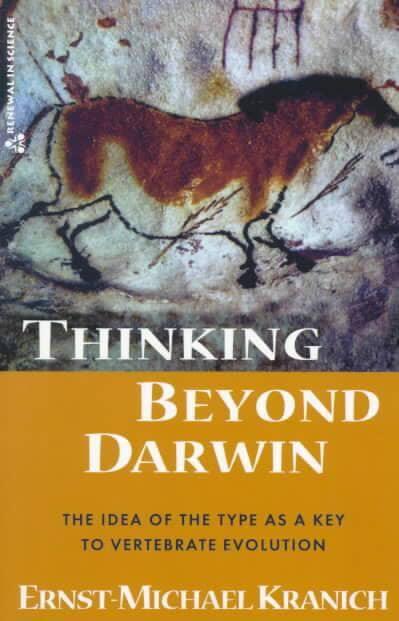
In Thinking beyond Darwin, Ernst-Michael Kranich focuses on a central problem of evolutionary science. He shows us a way, based on Goethe's botanical and zoological investigations, of seeing the coherence and inner dynamics of organisms.
Using Goethe's concept of type as a key to vertebrate evolution, Kranich methodically lays the foundation for a science of evolution. He focuses on the central problem of evolutionary science: are there underlying principles that connect the many disparate facts? By applying Goethe's method consistently to evolutionary thinking, Kranich shows that the laws and driving forces of evolution are encompassed by the inner lawfulness of living organisms and that we must participate through formative thinking in the evolutionary processes.
Thinking beyond Darwin, makes an important contribution to the development of more adequate concepts of evolution and arrives at clear insights about earlier animal forms and evolutionary laws that could have immense consequences for future evolutionary thinking.
What is the main focus of 'Thinking Beyond Darwin'?
The book explores Goethe's concept of type as a key to understanding vertebrate evolution, offering insights into the coherence and dynamics of organisms.
Who is the author of 'Thinking Beyond Darwin'?
The book is authored by Ernst-Michael Kranich, who examines evolutionary science through Goethe's botanical and zoological investigations.
What makes this book different from other evolutionary science books?
It uses Goethe's method to reveal the inner lawfulness of organisms, proposing a science of evolution based on formative thinking rather than random mutations.
Is 'Thinking Beyond Darwin' suitable for those interested in Anthroposophy?
Yes, it aligns with Anthroposophy and Goethean Science, providing a unique perspective on evolution that may interest those in these fields.
Choosing a selection results in a full page refresh.